Business encouragement and investment

Business encouragement

With a transformation of the tax system and banking system entrepreneurialism would flourish

The New Economics Party believes that we must be an enterprising nation and that pragmatic and creative business thinking must be encouraged at every level of our society. Our policies are the most business friendly possible. Little will stand in the way of entrepreneurship for those who create a labour intensive business with fair employment policies, good environmental practices and a low carbon footprint. Clean tech innovation can finally occur at full speed.

Cooperatives will be encouraged, both workers and consumers cooperatives. The NZ Cooperatives Association would be funded adequately for the purpose.
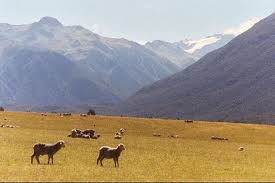
Farming would  thrive

Farming and other export businesses will thrive because the NZ dollar will drop when the interest rates drop.

EECA’s (Energy Efficiency and Conservation Authority) funding will be dramatically increased to assist all businesses to be future proofed against energy shocks.

Because we will be decentralising banks, it will be possible for them to invest in local businesses, just as the Bank of North Dakota has been able to over many years. Nurturing and mentoring of small and medium sized businesses will be encouraged. Thus local investors will be able with confidence to invest in local enterprises just as in the 1940s and 1950s when Christchurch people invested in firms like Lane Walker Rudkin.

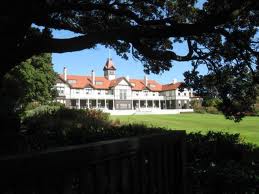
New Zealand as a Republic

Why we need a republic

New Zealand should be a republic

All of these proposals for change would of course be squashed by the Crown under the current system.

A republic is a country where the supreme power of the state is dependent on the consent of the citizens it governs. In a republic it is commonly said that political power operates only with the ongoing consent of the people. This is usually expressed through elections. The citizens elect representatives who are in turn responsible to the citizens who have elected them.

The majority of the world’s nations are republics. Not all of them are fully democratic, although two-thirds of fully democratic countries are republics. In a republic the head of state is not a hereditary leader. The head of state is either directly elected or is appointed by an elected assembly. They are most often called the president.

The arguments for a republic fall into three categories:


An elected New Zealander should be head of state

New Zealand will not be fully independent until we have a New Zealander as head of state. New Zealand likes to think of itself as an independent country. However, it cannot objectively be argued New Zealand’s current head of state represents this.


Democracy. New Zealand’s Head of state is our Governor General. This person has considerable powers and should be elected rather than appointed by a monarch on the recommendation of a Prime Minister.

This is in line with the principle that all systems with integrity must have semi-permeable borders.

Education, Health and Social Welfare

Education and Health and Social Welfare

Decentralise education, health and social welfare

These three categories account for the vast majority of government spending.

The best way to redistribute power from central government to local government is to allow health, education and possibly social welfare to devolve to local government. The health, education and welfare function at national level would be for servicing, research, and coordination.
1. People should receive benefits in their own right. When a woman is the secondary breadwinner in the household, she disappears in all of this.
New Zealand welfare entitlements are not based on individual but joint assessments. This system is having a negative impact on many families. It can undermine marriage or partnerships – separation in order to get a benefit. The system should be changed so that welfare entitlements are based on individual needs rather than household income.

2. The second idea is for a form of universal basic income in which all citizens over a certain age are entitled to receive from the state a certain fixed amount of income (financed out of general taxation) regardless of their employment status.
The Social Security Act 1964 should be repealed and a new system devised which provides an untaxed universal basic income sufficient for people with families to live on.
Implement, as Gareth Morgan has suggested, a state paid income for all adult New Zealanders.
This is called a Guaranteed Minimum Income, Basic Wage, Universal Income, National Dividend, etc, etc. Our version should be called a “Kiwi Dividend”. … The name “Kiwi Dividend” more correctly labels it as a payment made to all citizens as of right rather than as an act of charity.

(This section to be reviewed in the light of our policies on timebanking and the reciprocity principle in Nature).

Savings, Loans and Insurance entities

Savings, loans and insurance

Old style Savings Banks work very well

With the disappearance of the privilege of seignorage as a source of income, there will be diversion to investment in green business. The reinvention for the 21st century of safe regional savings and loans banks, savings pools, building societies, mutual insurance societies would be encouraged so that people could borrow money from others at a local level. Without the privilege of being able to create the nation’s money supply at a profit,  banks would then have 100% reserve, thus reverting to Savings and Loans Banks which lend out depositors’ money.

David Korten in his New Economy Working Group Report, How to Liberate American from Wall Street Rule, has  suggested that the system of community banks, mutual savings and loans and credit unions is one with proven capacity to perform the desired functions. It worked throughout the 1940s to the 1960s. It was well regulated and decentralised banking system and provides a model to restore financial and economic integrity.


Financial Transaction Tax

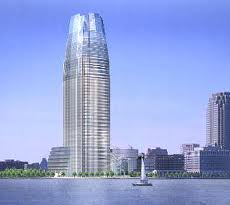
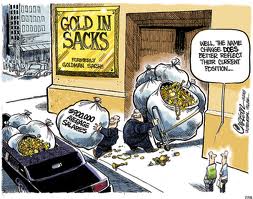
Goldman Sachs is one of the biggest building in many major cities and their CEOs received huge bonuses after being bailed out by the taxpayer

Goldman Sachs rules the world

Financial Transaction Tax.

In line with our policy to tax unearned income not earned income we would impose a Financial Transaction Tax. Money was intended as a method by which goods and services are distributed at an agreed value. Money was never meant to be a commodity in itself.
In 2008, prior to the global financial crisis, world trade in various financial commodities was 74 times higher than global GDP. Daily turnover for global currency trade as of April 2010 was $4 trillion ($1,460 trillion a year). This speculative activity is destabilising the world economy and creating speculative bubbles that ultimately hurt grassroots people.
The world of international finance has become a global casino where investors seeking quick profits bet huge sums of money around the clock.High frequency trading has got out of control and one commentator suggested our financial system “needs some sand in the gears to slow it down.” Wildly fluctuating currency values play havoc with exporters confidence to create jobs.

More than US$4 trillion is traded every day, and 95% of this is from speculators while 5% is to facilitate real trade. An explosion of high speed, high frequency trading carried out by computers is causing an increasing number of ‘flash crashes’ and undermining markets’ role in efficiently allocating resources.
The Kiwi dollar is currently the tenth most traded currencies in the world.
A thousand economists wrote to G20 finance ministers meeting in Washington in April 2011 urging them to tax speculators to help the world’s poor. In a show of unity rare in the economics profession, the experts from 53 countries describe the so-called “Robin Hood tax” or Tobin Tax on transactions in financial markets as “an idea that has come of age”.Supporters range from Bill Gates to the Archbishop of Canterbury.

We support a tax on currency speculation to limit high frequency trading. This was originally called the Tobin Tax but more recently called the Robin Hood Tax or Hone Heke Tax. This places a small tax on all financial trades, raises considerable revenue and is highly effective. It has a negligible effect on real investment but will render most high-speed computerised trading unprofitable.
The current size of the derivatives market is now a mind-blowing $1.4 quadrillion.  which is 23 times the value of the world’s GDP. How big is that? If you started counting at one dollar per second, it would take 32 million years to count to one quadrillion dollars.

FTT is administered by the banks. The tax will be collected through data bank facilities on every bank transaction at point of withdrawal. The percentages rates that are being talked about internationally for Financial Transaction Taxes are very small, ranging from 1% to as low as 0.05%. We suggest putting a .01% FTT on all trades of derivatives and a 0.1% FTT on all trades of stocks and bonds.
The Robin Hood Tax is justice. The banks can afford it. The systems are in place to collect it. It won’t negatively affect ordinary members of the public, their bank accounts or their savings. It’s fair, it’s timely, and it’s possible. The feral banking economy must to be brought under control.
A Financial Transaction Tax (FTT) would be like GST for the financial sector. In NZ financial services do not currently incur GST. FTTs collected via the electronic bank settlement process would be impossible to avoid.

Resource rentals

b)             Resource Rentals
Untaxing the productive economy creates wealth while taxing nature conserves the planet. We would tax the use of land, metals, oil, electromagnetic waves, water, agricultural quotas, and any resource which is part of the commons. The principle is that we pay for what we hold or take, but not what we do or make (unless we make them using precious resources or the product is environmentally or socially harmful.)

All private companies which sell basic natural resources will pay an annual rental to the public purse.

If hydro electric power stations currently owned by Government were sold to private owners, then the new owners would have to pay a water tax for our public revenue.

Water tax. The worldwide demand for water is predicted to increase steeply and we have no reason to believe New Zealand will be an exception to this trend.

The irrigation tax proposed by the Greens is a good example of a resource tax. It is a tax on the use of a scarce common resource, water for personal gain. If farmers were taxed according to the resources they used, then water intensive farming would not be as profitable as dry farming. Dairy farms would give way to sheep and beef farms and horticulture, thus reversing the trend to dried up and polluted rivers. It would also mean overseas owned utilities and monoculture agribusiness would start to pay their fair share of tax.

Likewise a resource tax on scarce resources like oil would include petroleum based fertilisers and pesticides. This  would hasten the move to organics. Another effect would be to minimise taxes for sustainable farming and consumers with a low carbon footprint. Changing to resource taxes would simplify the tax system.

China has of late moved towards a rare earth tax and has adjusted its coal taxes upwards. Australia is proposing a tax on mining.

An Interest-free International currency needed for international trade

International currency for international trade.
After prolonged and bitter debate, the international agreement at Bretton Woods in 1944 was to use the USA dollar backed by gold as the international currency, but this has given an unfair advantage to USA ever since. If people in a mutual credit scheme like a LETS scheme or a trade Barter Company can trade with each other without interest being paid, so can nations.

We would argue for an international currency with a clearing facility so we would promote an International Clearing Union with export credit accounts for trading among member nations.

In the banking crises of 1998 the Malaysian president brought in a policy to stop their currency from being used outside their country. If it came to Malaysia from the outside it was deemed worthless. This was a recognition of the principle of managed borders. Its economy as a result did not collapse to the extent that Indonesia’s and Thailand’s did and the IMF ended up noticing this.

The most powerful international currency we could use would be one invented by economist Richard Douthwaite of Ireland.