
Land went out of the Consumer Price Index in 1999

Despite the fact that section prices tripled in fifteen years to 2007, land is not now included in the Consumer Price Index. This means that the official measure of inflation is unreliable as it is far lower than the actual figure.

Today I received a letter back from the Minister of Statistics, Hon Maurice Williamson. I had heard that land went out of the CPI but couldn’t remember when or why so I sent in an Official Information request. The Minister dates the letter 14 Mar 2012 and says “Dear Ms Kent

Thank you for your letter of 20 February regarding the exclusion of the price of land from the Consumers Price Index (CPI) basket of goods.

“I am advised by Statistics New Zealand that land (i.e. residential section) was included in the CPI until the June 1999 quarter. Following a review of the CPI in 1997 land was excluded, taking effect from the September 1999 quarter.

“The 1997 review by an external advisory committee confirmed the CPI’s main purpose as being informing monetary policy setting, and that the CPI should be focussed on the concept of “acquisition”. The reason given for excluding land from the CPI from 1999 was that it was considered to represent the investment component of home ownership (with dwellings representing the shelter component).

“The September 1999 quarter CPI information release explained it as follows: “A dwelling provides shelter over a long period of time. Over time land is not consumed and so can be considered to represent the investment component of home ownership. As investment expenses are outside the scope of the CPI the rebased CPI excludes expenditure on residential sections.”

“Information on the sale of land is available from QV (www.qv.co.nz) and the Real Estate Insititute of New Zealand (www.reinz.co.nz).

I trust this information meets your needs and thank you again for taking the time to write.

Yours sincerely

Hon Maurice Williamson

Minister of Statistics.
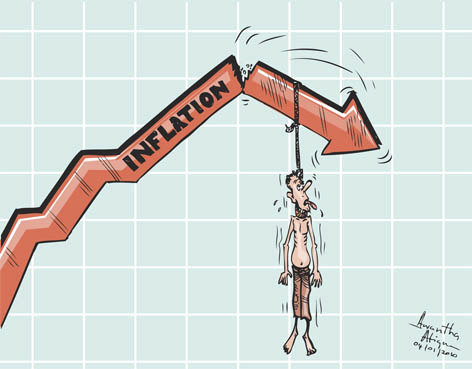
You can be assured I will write back to ask how inflation can be accurately measured when the price of residential sections is excluded. Every time a section rises in price it puts up the price of the property. So when someone buys property in the future, they will have to pay a higher prices than previous owners paid. This also means the total mortgages and the total money supply has to rise accordingly. When the money supply increases there is inflation. So it is not a small quantity we are talking about. We are neglecting a huge factor. The CPI cannot be taken as a valid measure of inflation and there is no reason to have any faith in it. The Productivity Commission said the price of residential sections tripled in the fifteen years to 2007.

Right now we are going through a period of fairly stable prices, but no doubt in the future the cycle will come around again and prices will rise.  The value of all residential properties in New Zealand was estimated by the Tax Review committee of 2007 to be $298 billion. This excluded land for commercial forestry, agriculture, industrial, commercial or mining or land owned by central or local government.

As Eisenstein says “Money is deeply and irretrievably implicated in the conversion of the land commons into private property, the final and defining stage of which is its reduction to the status of just another commodity that can be bought and sold.” After this letter, we could add to this “and used as an investment”.

 

Visitor levy Bill illustrates the commons of local authority infrastructure

Yesterday I happened to turn on a Parliamentary debate on a Bill called the Southland District Council (Stewart Island/Rakiura Visitor Levy) Empowering Bill. The legislation would give the council, whose rating basis is very small, the right to charge visitors up to $5 to pay for the island’s growing tourist infrastructure. It would be expected to raise about $250,000 a year.

I was heartened by this debate. Not only had the Select Committee had a very collegial discussion on it, but there was little opposition in Parliament, other than worrying that other councils might follow suit. I hope they do. Far North District Council could be one.

The infrastructure of roads, sewers, community halls, water, wastewater and stormwater is part of the local commons. It was built by the people and belongs to the people so the people have the right to charge others for the rent of it, no matter how temporary.

Our national built infrastructure of our roads, dams, power stations and electricity network is similarly part of our commons and should never be sold off. The sweat of our nation’s grandfathers is in those dams. The vultures are coming to get it, including the land. Those who would sell it are guilty of treason. And they are coming to Greece right now. Imagine selling off the Parthenon, the cultural commons of the Greeks.

Our land will increase in value with this new community facility

I am excited. We have a wonderful new gym which has been built by Te Wananga O Raukawa, the Maori university on the main road to the beach and I think, because it will attract so many top level basketball and netball games, it will be an asset to the small town of Otaki where we live. On the opening day today we had two top teams playing netball here and that will only be the start.

I am even thinking the value of our own land, less than 1km from the gym, might go up. It will over time and the land values in all the surrounding area will be affected as well, depending on how close they are to this new community amenity (and depending on how many businesses disappear as well). It is a very fine complex, described in the local paper as a world class facility. It came in under budget, on time and without debt, thanks to the great people at the Wananga.

So why should private landowners gain from the increase in land value? Most of us didn’t work to cause it. And those who don’t own property (plenty of renting in our town, plenty of poverty).That is stealing from the public purse. Land value taxes should be imposed so that the public recaptures all this privately accumulated value. That will only happen if rates are levied on land value not capital value and not with 70% of the rates being in fixed charges, as we have now. So we are far from that now and we have adopted the philosophy of user pays. This, because user pays is so convincing, is going to be hard to change.

This happens any time there is a new public facility. Everyone near the the terminal of the Waikanae Railway station benefited when the Paraparaumu line was extended to Waikanae (well it was that part of the cycle – their values didn’t go down while others did). So if a gym raises the value of our land, how much more would the railway coming to our town affect it!!

I just think of all the poor people in our town with no hope of ever owning land. It will widen the gap between rich and poor. And when land prices go up, the banks benefit,the money supply increases and we get inflation. No good for the poor!

We just have substantial challenge how to solve this politically.

What Greece needs is a land backed currency (and so does New Zealand)

I have just been listening to the most informative and important interview by Adrian Wrigley of the Systemic Fiscal Reform Group in Cambridge, UK.  Here it is: http://podcast.3cr.org.au/pod/3CRCast-2012-02-22-19953.mp3

Karl Fitzgerald of Earthsharing Australia interviewed him on the radio station http://3cr.org.au on a programme called The Renegade Economist.

To address the problems of Greece, and for other reasons, Adrian is studying the economic history of Germany during the early 20th Century, and says it is tragic that Economic History has been dropped from economics departments of universities because in history lies a lot of wisdom and knowledge. He describes what happened leading up the period of hyperinflation in 1923 and then what the German government did to solve it. They banned the private reserve bank from issuing currency for profit, formed a new reserve bank which issued paper money backed by mortgages and this stopped hyperinflation really quickly. It was called the Miracle of the Rentenmark. However, (as with Gesell inspired currency in Wørgl Austria some ten years later), the banks quickly stepped in. The Rentenmark was a danger to the status quo. A land backed currency is the big danger for the ruling classes.

However, like the other miracle, Wørgl, it only lasted a very short time. Soon the banks stepped in to have their way.

This is quite a long interview but full of fascinating facts. Well worth the time out of your day. It makes me realise that noone who really cares about monetary reform can turn a blind eye to the fact that the owners of banks will do anything to squash land backed currencies and kill them instantly. It reminded me of a time when I was writing my book and discovered that land tax went out at the same time as the private banks insisted that the NZ government use income tax instead. Before then we were reliant on just excise taxes and land taxes. And since then we have assumed that income tax is normal! Our money system is backed by income tax, not by land. The private banks, creating money for profit, have got that windfall. No wonder they are falling over themselves to lend to farmers.

It also reminded me of the struggle within the complementary currency movement to invent a currency backed by land. Everyone has talked about it, but to my knowledge it has never been done. It remains a dream. Now I can see why.

I hope you enjoy the interview. A lot of history in it. It is great on Greece too.


Amazing people join this website

Today I have been making a list of those who are registered on our site. They are awesome people.

We have people over a wide age range from 75 down to late teenagers. Three people said they trawled the internet trying to find a political party which seemed to address the issues they were worried about and had solutions they thought would work. Others hit upon it by accident.

We have many professions here from financial advisers to teachers, engineers, architects, lifestylers who practise permaculture, permaculture teachers, IT people who are fully aware of the challenges of peak oil and a wide range of other challenges. We have those who read Spontaneous Evolution by Bruce Lipton and Steve Bhaerman (remember Swami Beyondananda? He said “I have good news. There will, indeed be peace on Earth.. I sure hope we humans are around to enjoy it”. We have psychologists, a theology graduate, someone who built an electric car, someone who sells raw milk and someone who has been a leader in many sustainability organisations. We have members of Transition Towns from various places and a farmer who hates land tax policy. We have many who have read widely on the topic of money systems and a lot of people who have read my book Healthy Money Healthy Planet. Some have been to Christoph Hensch’s course on money in Christchurch. We have followers of Max Keiser, Bernard Lietaer, environmentalists, a pharmacist, an activist in the Occupy movement and an anthropology scholar.

Some have been involved in Green dollars in the past and many have been founding members of intentional communities and were once keen Social Credit Party, Values Party or Green Party voters. There is a keen land value tax man and someone connected with a church based Liberty Trust. We have Steiner School enthusiasts and daughters and sons of ministers in a church. Some are involved in coast care and river care. Some are interested in small business and entrepreneurship.  It goes on. Amazing people, leaders in thinking and that’s how it will be.

Collectively many of us believe, as Bruce Lipton and Steve Bhaerman write; “A miraculous healing await this planet once we accept our new responsibility to collectively tend the Garden rather than fight over the turf. When a critical mass of people truly own this belief in their hearts and minds and actually begin living from this truth, our world will emerge from the darkness in what will amount to a spontaneous evolution.”

So I have had my first interview with a radio station and it was a student radio station who picked up the piece on how Auckland needs an Auckland currency. It was fine, I enjoyed it. Every time you speak to the media it stimulates you to learn more so you can answer better the next time.

And I have been working still on thinking about how we can get a politically acceptable policy on land tax. Is to be a Location Value Covenant or a Land Value Tax? We need a policy which isn’t going to take ten years to implement. Every time I raise land tax someone says “Well that is political suicide”. But if I start talking about getting a policy based on existing contract law which means that instead of paying the banks for your house you pay the Council or Central Government, the reaction is different. If you pay Central Government, then will have enough revenue to drop GST and soon income tax.

Imagine a time when all landowners have to pay and nobody can gain advantage by taking their assets overseas or paying for an army of accountants who minimise their tax. Imagine a time when you can work all you want and don’t get penalised for it, but prices are low because there is no interest built into the price of goods, no GST and no income tax. More spending power. Imagine a time when we have thriving local economies because local authorities have issued a different sort of money, one that depreciates like the goods they represent. Imagine a time when people spend their local money in sustainable business investments rather than in speculating in land or simply banking the money and keeping it out of circulation. As Silvio Gesell says in his book The Natural Economic Order “Money is an instrument of exchange and nothing else”.

Last week both Laurence and I were interviewed by Rose Diamond in her A Whole New World Series

Official report on Oil Prices and Transport Sector Resilience suppressed by Brownlee and Joyce

Yes we have had an official Government report called Oil Prices and Transport Sector Resilience in Nov 2009. This unsigned report had to be ferreted out by the wonderful Thames-based Dennis Tegg, who blogs so responsibly on the topic of peak oil. http://oilshockhorrorprobe.blogspot.co.nz/2011/08/new-zealand-at-greater-risk-from-oil.html. Our unique vulnerability on many fronts is described in the report. Gerry Brownlee and Steven Joyce apparently don’t believe an informed public is going to be useful for their oil friendly and lignite friendly agendas! The road transport lobby is no doubt also doing some effective lobbying to bend their ears.

There is another report, the one written by Clint Smith for the Parliamentary Library in Oct 2010. http://www.parliament.nz/en-NZ/ParlSupport/ResearchPapers/4/6/a/00PLEco10041-The-next-oil-shock.htm and to date is still on their website. It is excellent.

And of course there is a report commissioned by NZ Transport Authority from 2008 which was never given much airtime. It was 148 pages long.

And during January Australia suppressed its long and comprehensive report on peak oil too.

The Minister of Defence is also turning a deaf ear to military reports overseas and neglecting to commission a report for our country’s security. Like the others he has his head firmly in the sand. When a US CNA Military Advisory Board Report on peak oil came out last year, calling for a 30 percent reduction in US oil use over ten years to reduce “grave national security risks”,  I wrote to our Minister of Defence, Wayne Mapp, to find out whether he had seen it and asking under the Official Information Act for copies of all reports on oil, and the implications for security that he had received. He replied that he hadn’t.

No wonder we have seen all this rush for deep sea oil exploration and lignite production in Southland. Tag Oil in early January spoke of the potential to build thousands of oil wells in the largely untouched region of New Zealand, and said that New Zealand could become the Texas of the South. This was repeated by MPs and Ministers. The dangerous and resource intensive practice of fracking continues. So widespread is the local concern, even the Christchurch City Council has asked for a moratorium on fracking.


Location Value Covenants – joining land tax reform to monetary reform and solving lots of problems at once.

You will have been wondering what we are up to.

Well remember I said we were working with Adrian Wrigley and Robin Smith from a Cambridge think tank? This has continued until I understand what their proposal is and what are the possible objections to what I think is exciting new policy. I have been talking to many members of the party about my enthusiasm for this, because it overcomes all sorts of objections to introducing land tax.

Adrian is the brains behind the Location Value Covenant idea and I have adapted it for Rates Vouchers issued by a local authority. Basically the national version of it is this:

People with a mortgage go to government and bargain. They say we will covenant our property to pay a substantial sum to you if you give us a Treasury Note to the value of the current mortgage (or a lesser amount). The amount settled between them is the sum of what they were paying annually in mortgage plus what they were paying in rates, minus 10-15%. When the deal is done, the government is the recipient of a high sum linked by a covenant to that property. Their revenue increases. The property owners take this Treasury Note (or an electronic version of it) to the bank to pay off their mortgage. 60% of our total mortgage bill is in fixed interest so has no penalty.

Their property now carries a financial burden, so as a result its value drops, but the home owners equity doesn’t. Note above it is Treasury Notes not Reserve Bank notes. Why? Because the Reserve Bank, like other central banks, is too linked to Wall Street and the commercial banks of the world. Treasury is the Government department which accepts taxes. A Treasury Note is something valid for the payment of taxes.

So government is soon gathering enough revenue to pay a citizens dividend and then will be able to drop GST, income tax and company tax. Whereas before the banks had hold of our citizens through mortgages, they are left out in the cold. The Dominion Post put the value of current mortgages recently at $173 billion. This will gradually reduce.


Then the local authority version is this: (another paper)

Would be property purchasers are short of $200,000 for buying a house they want. Instead of going to the bank they go to the local authority and say “We would pay $x a year for mortgage and $y for rates. How about we add those two together, drop it a bit and I agree to pay you that amount regularly and this is written into a covenant on our property title? Would you then give me a note for $200,000 in Rates Vouchers?” The council says that sounds like a good deal and then the purchasers go to the vendor and say “I can pay you in Rates Vouchers for some of this property.” They answer
“What would we do with that?” “Well you could buy a house in this district and pay for it with that because they are valid for the payment of rates.”

This would work as long as the vendor wanted to buy in the area. If they bought using rates vouchers as part payment and this went down the chain till they struck a vendor who just wanted to spend the money in the council area. The Council would help by persuading some of the bigger local businesses to accept part payment in Rates Vouchers. All local tradespeople could accept part payment, and of course they could save their precious national dollars for paying GST and income tax. Perhaps there could be an incentive for circulation built in to the local currency so it would circulate fast, doing good all the way.

The payments are linked not to inflation but to an land value index worked out for the general area. For instance in Chch after earthquakes if the land value in a big area dropped by 50% the payments would drop 50%. Generally land values are less variable than interest rates.

Sooner or later the Government would see that several local authority areas are thriving economically. Unemployment is starting to drop and business confidence is rising. Then local authorities could tell them they could do it themselves you know. Use Treasury Notes to relieve current mortgage holders.

In this way if it came in at local authority level first, the regions would thrive and their economies would move towards using local materials, and local labour and its home prices would drop dramatically. The trend is towards sustainability (a word I rarely use these days but I can’t help myself here, because it isn’t just fashionable rhetoric, it is true!). When government started to reduce income tax, GST and company tax, the people’s purchasing power greatly increases. Take a person aged 40. If you capitalised the value of their future labour it would be much bigger than the capital in their home. Prices would drop without income tax or GST or interest on money (there is less bank created money in the system after it has been operating for a while).

I am inviting New Economics Party enthusiasts to view these papers. Just let me know by email or see me on Facebook or twitter or google +. There is so much to discuss. Everyone has different ideas to raise, but we are making headway.