No species survives unless it is good at adapting to its environment. And environments can change very fast. This article addresses the adaptations we must make to a rapidly warming world, to living with a low carbon economy and to major collapse of the global economy.
Getting to a low fossil fuel economy fast
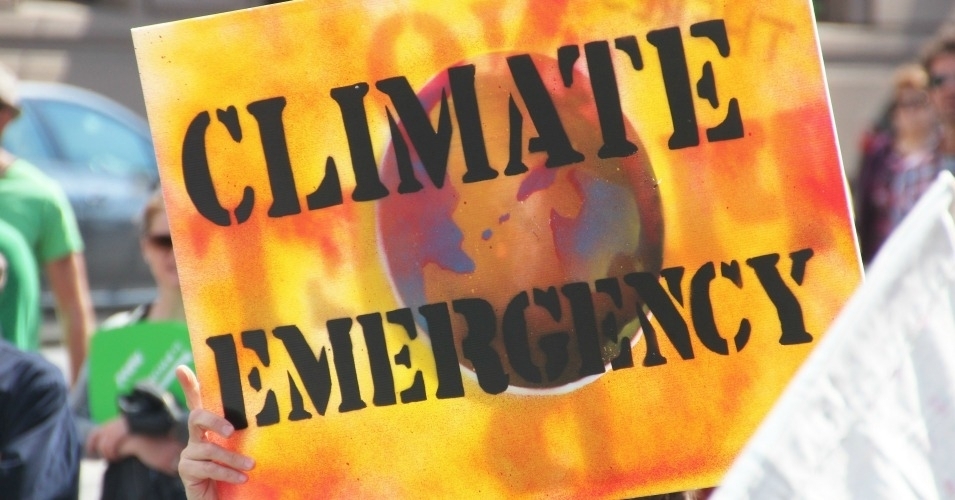 Climate change has been humanity’s wake up call. Energy is at the heart of everything we do. For centuries we have used the energy of the sun in one form or another. It was only when we discovered oil, a form of stored sunlight compacted for millions of years, that economic growth really took off.
How dense is oil? Richard Heinberg explains that to push your car for 30 miles would take 6-8 weeks of hard labour, but you can put a gallon of petrol in your car and get there quickly for a few dollars .
We use fossil fuel energy not just to power our cars and tractors, but power our assembly lines, make our cement, plastic, pharmaceuticals and paints. As the low hanging fruit becomes exhausted, the cost of digging out fossil fuels rises and the unconventional oil, gas and coal is of not such high quality. Despite the financial challenges, oil companies continue to forecast increases in extraction.
When climate scientist Bill McKibben first wrote in 1989 on the coming climate challenge, he didn’t foresee the pace of change. He continues to be astonished at the rapidity of loss of Arctic ice, increasingly devastation cyclones and other extreme weather events. In a talk to the Oberlin College and Conservatory conference in Ohio, After Fossil Fuels: the Next Economy, he said we now have a very limited timeframe.
Founder of the Carbon Tracker, Mark Campanale, reminded listeners that economist Nicholas Stern had estimated that to get to two degrees of warming the world needed to spend $90 trillion in infrastructure for a low carbon economy. Campanale had calculated that there is only a 50% chance of getting there in the time estimated by major governments signing the Paris Agreement using their scenarios. There is so much unburnable carbon in the reserves of oil, gas and coal companies, that even if there was no further digging or mining activity than there is now, we would still overshoot the 2 degrees.
To put this $90 trillion in investment needed in perspective, the world GDP is $70 trillion and the total value of the stock of all the companies in the world is only $60 trillion. Campanale, a sustainable investment analyst, noted that some investors are saying it will all blow over and it is cyclical. So they keep their shares in fossil fuel companies until this happens. All the oil companies and OPEC forecast continual growth of fossil fuel extraction.
Two weeks before this conference Bill McKibben had post an article Recalculating the Climate Math, in which he wrote that scientists now think that 2 degrees is too much; moreover, the amount of fossil fuels in the currently operating plants worldwide would actually bring us above 2 degrees. So the amount of CO2 we can burn has to be reduced from 943 to 800 gigatons. And if we are going to get to 1.5 degrees, a goal set in Paris, we will need to close all the coal mines and some of the gas fields we’re currency operating long before they are exhausted. He finishes by saying ‘And if we don’t get it right, then all of us—along with our 10,000-year-old experiment in human civilization—will fail.’
And as for living with less oil, gas and coal, that is huge too. There are so many challenges, from how to power industrial machinery to how to transition from kerosene as aviation fuel, it hardly bears thinking about. There is no doubt however that we will have to grow our food more locally, to travel less and to have more localised economies. The permaculture movement can teach us how to build houses with less cement. There will be stranded assets like oil tankers and bankruptcies galore in the huge fossil fuel industry, let alone the huge losses on high-risk energy bonds in the fracking industry.
All the more reason why we have to think up the new economic system fast. Innovation to transition to a low carbon economy can only happen if investment is directed there and new companies have no deadweight taxes, only resource taxes.
We also need to adapt to an economy that will collapse.
Actuary Gail Tverberg, who through the years has predicted many changes that have come to pass, says the global economy can’t grow fast because the cheap-to-extract energy is depleting. She describes a situation where growth is slowing, global trade isn’t growing and central bankers can’t solve it even with historically low interest rates. More energy is needed now to extract energy, it takes energy to make and transport goods, and it takes an increasing amount of energy to create a growing amount of goods and services. Less cheap to extract energy produces less productivity growth and this translates into stagnant wages which no longer allow non elite workers to buy big ticket items like cars and houses. So the economy declines further.
She maintains this means commodity prices can’t hold up, so producing them eventually becomes uneconomical. And we are on a downward spiral. ‘This situation could lead to catastrophe because metals, agriculture and energy are all essential to the economy’. The rate of return on investment falls, new debt goes into buying assets and eventually, when commodity prices fall, asset prices fall. The price of agricultural land will fall. This leads to debt defaults and bank failures, affecting banks, insurance companies and pension plans. The lack of new loans will depress demand further. She predicts oil may fall below $20 a barrel.
Most investors and financial advisors are unaware that the price of commodities (in New Zealand it has largely been about the price of whole milk powder) is cyclical so it will turn around. But they haven’t factored in energy.
At the end of this long article in October, 2016 she concludes there is no way out of the problem over the long term. We will have reached our ‘Minsky Moment’.
Adapting to sudden financial collapse will be humanity’s biggest challenge.
Continuing War
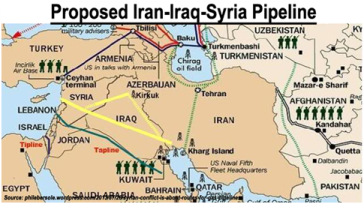 While most societies have lived with war, we now have the added factor that there is a scramble for the last remaining fossil fuel reserves. Investigative journalist and international security scholar Nafeez Ahmed has explained the conflict in Syria in those terms, saying that there is competition for the offshore oil and natural gas reserves between the world’s biggest oil companies and that is why they court Assad. When civil war broke out the plans of Shell and oil majors were unexpectedly suspended. When it is resolved they will be able to continue. American firm, Genie Oil and Gas has been granted exploration rights in the Golan Heights. Among Genie’s board members are Rupert Murdoch, Larry Summers, Dick Cheney.
American Shale Oil, a subsidiary of Genie candidly admits on its website: ‘The peaking of world oil production presents the US and the world with an enormous challenge, Aggressive action must be taken to avoid unprecedented economic, social and political costs.’
In addition there are two proposed gas pipelines to get gas for Europe that are on hold. One is from Iran through Iraq, Syria and Lebanon to Europe. This was signed by Assad and backed by Russia. The other is from Qatar’s North Field through Saudi Arabia, Syria and Turkey.
A Russian oil and gas company began oil prospecting operations in September 2015, the same area scoped by French firm CGGVeritas.