Christchurch currencies needed for reconstruction

Media Statement

4 Nov 2011

Let Christchurch City Council issue a Christchurch dollar, says candidate.

According to Laurence Boomert, Wellington Central candidate for the New Economics Party, the best thing the government could do to help Christchurch recover to allow them to create a range of interest free local currencies.

“Here we have a cost of up to $30 billion for the Christchurch rebuild. It is time to think outside the square,” said Boomert.

The Council could reduce its expenses in NZ dollars, and if local businesses play their part, then the labour part of local infrastructure repairs could easily be paid with a local currency. Boomert said there is a huge component of local labour and there should be no need to use precious national dollars for that.

CERA, the Canterbury Earthquake Recovery Authority needs to play its part. It is already empowered to override any existing legislation, so that should also be true for the legal tender law. CERA could declare the Christchurch Earthquake Dollar legal tender, and then have the City Council issue the money by spending it into circulation. He said it would involve legislating to ensure that the Christchurch dollar would be acceptable for paying rates.

It would be essential that the Chamber of Commerce and other business associations should be on board and we call on them to do so. Since local businesses are hurting as a result of the earthquake, anything that increases turnover should find their support.

Boomert said the Council could persuade locally owned businesses to accept the Christchurch Earthquake Dollar and in this way money could be kept in Christchurch.  The notes could have pictures like the old cathedral and other landmark buildings on it.

“A local currency keeps money in the area and usually circulates faster, doing more good,” said Boomert.

For further comment Laurence Boomert  03 525 8229/027 258 8807


ANZ records $1billion dollar profit from New Zealand

ANZ Auckland. None of the directors lives in New Zealand

Not a single director of ANZ is a New Zealander. Today it was announced that ANZ made  $1 billion profit and of course it was sent to Australia.

So looking at their website we find their board comprises seven men and one woman. Two live in Sydney, four in Melbourne, one has homes in both Sydney and New York and one lives in Singapore. They have backgrounds in law, accountancy and one was an ex Reserve Bank of Australia Governor. No surprises there. And of course they are on the boards of other companies like CocaCola and one was an advisor to Goldmann Sachs.

Bernard Hickey was on Closeup TVNZ tonight explaining how their margins have widened. People are paying higher mortgages and investors are getting lower returns. But this isn’t all. A look at their website shows they are dealing in derivatives like spots, options and forwards. Then there are spot minors, forward majors etc. All sorts of “financial instruments”  that not even bankers understand themselves sometimes. This calls for a financial transaction tax.

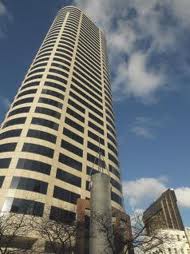
And of course there is the small matter of fractional reserve banking and the fact that private banks create and control the money supply. No wonder their buildings are the biggest in each city. No wonder they make record profits when the country is in a recession.

Our policy is that “We would require corporations that choose to operate in more than one country to charter an independent local subsidiary in our country with majority ownership here.”

The TV item said that 95% of profits from our banks now go overseas. How can we maintain any national integrity when we are controlled by overseas owned banks? This issue must be a priority of any self respecting government.

A main assumption of Prefu just fell over!

The supremely optimistic Polyanna style Pre-election Fiscal Update released by Treasury had three assumptions. One was that there was an “orderly resolution of the Greek debt crisis”.

But with the Greek Prime Minister just announcing that there would be a referendum on the bailout package and the markets responding by panicking, it is abundantly clear that Treasury’s assumption just flew out the window (to change the metaphor).

So the major political parties will go on debating the finer details of their different policies while Rome burns (well Athens actually) and France and US and New Zealand and all those who trade in our connected world.

When we have a financial system based on issuing money supply as interest bearing debt why are we surprised when the debt compounds? Why are we surprised when everyone is in debt? It is time to understand that we have come to the end of economic growth on this planet and we need a new economic system which works for everyone.


Deirdre

Petroleum imports now $7.7 billion a year

The NZ Herald on Thursday Oct 27, 2011 reported that our imports of petroleum (read crude oil) climbed 22% to $7.7 billion in the year.

Not an election issue of course. After all the National government, and presumable Labour if they miraculously were elected, thinks it is business as usual. Import oil and one day maybe the price will go down?? What are they really thinking and what do they really know about the global oil situation?

I had some difficulty finding an annual figure for crude oil imports because a search revealed monthly imports and sudden rises like 53% rise in Aug 11 was explained away by saying we have large, irregular shipments of crude oil arriving at Marsden Point and some months the imports are low. However I finally found a figure for the whole year, authoritative and three days old only.

$7.7 billion is more than twice what we spend each year on law and order, it is nearly half the health budget. If the cost of importing oil goes on increasing at the same rate the price would equal the health budget in three years’ time.

In fact if it keeps rising by 22% a year, by 2016 the cost of crude oil imports will be $20.81billion which will be approaching what we spend on social security and welfare.

I guess the theory is that if we assume all is going to be business as usual, then we will all benefit from more transport. Somehow all this expensive oil will bring jobs and prosperity…. dreams are free I guess.

What are the real political issues this election?

Well I sat through The Nation this morning on television, really had to hold myself in the seat because I was so bored. Reflections on the leaders, the campaigns really had little to offer other than saying Labour was on the front foot because they were realistic enough to tell us they would raise the pension age to 67.

So what are the real election issues? In my view they are the Greek bailout with a further loan, the Occupy Wall Street international movement, our borrowing of $300m a week so we can pretend all is well and we can maintain our lifestyle for ever, the Thailand floods and the price of food.

So why on earth would I pick those issues? I pick Occupy Wall Street because the world is waking up to the fact that our banks have been allowed to get so big and deal in such crazy sums of their exotic ‘financial instruments’ that Governments deem them too big to fail. People are waking up that the banks rule the world, particularly Goldmann Sachs, JP Morgan, Barclays and Bank of America.

Secondly I pick the Greek bailout because it is only going to last for six months and each time there is a bailout the politicians in France and Germany become less and less re-electable.  You can’t solve a debt problem with more debt. The relevance for NZ is that we are going further and further into debt with our borrowing programme and we just might end up like Greece ourselves.

I picked the Thailand floods because of the relevance for our rice prices and the critical nature of climate change in the future of our economy. Yes I am not just talking about more extreme weather events for our grandchildren to suffer, but I am talking here and now there is damage to our economy. Import costs rise every time there is a crop failure somewhere in the world. And climate change is going to affect the income we get from our agricultural exports too.

Why is the price of food so critical? Because whether or not people link it with crop failure or with rising prices of oil which affects the price of fertilisers, pesticides, agricultural practice and transportation they sure know when food prices rise. A professor at New England Complex Systems Institute Yaneer Bar-Yam is working on the relationship between food prices and political uprising and maintains the relationship is strong.

There is another issue and that is the sale of state assets. I will deal with the relationship between that and our policies in another blog entry some time soon.

Regulating the Banks


During the 1980s and after the banks were successively deregulated. According to David Korten who saw the same thing happening in the US: “This deregulation shifted the focus of the money/banking/finance system from investment in real wealth creation to a focus on using money to make money through unproductive speculation, arbitrage, usury, deception and market manipulation.”  Financial institutions which were not subject to banking rules, such as hedge funds and private equity funds started to make huge returns.

Roger Douglas deregulated our banks as one of the first acts of the Lange Douglas Labour Government in 1984. The system’s priorities shifted from funding productive investment to financing speculation.

According to a 1996 speech by the Governor of the Reserve Bank: “All controls on  credit, foreign exchange and out-bound overseas investment were lifted in 1984, and the New Zealand dollar was floated early in 1985. Banks were freed from any quantitative limits on their lending growth. The requirement for banks to hold deposits with the central bank, or to hold specified investments in government securities, was abolished. Banking, previously the exclusive preserve of one government-owned institution and three foreign-owned banks, was opened up to full competition. The licensing of those authorised to deal in foreign exchange was discontinued. Competition between currencies was given some scope in that contracts could be denominated in any currency (though taxes must still be paid in New Zealand dollars, and the Customs Act prohibits the importation of other currencies intended for circulation).

In January 1996, the banking system was further liberalised when the Reserve Bank commenced a rather different way of conducting prudential supervision. Instead of reporting on a confidential basis to the central bank, banks were required to issue detailed quarterly public disclosure statements, which must be audited twice-yearly by external auditors. Instead of limiting their exposure to individual counter-parties to some central-bank-specified percentage of capital, banks must simply disclose how much risk concentration they have in their portfolio at end of quarter, and at peak intra-quarter. Instead of complying with detailed guidelines on internal controls, directors must simply attest, in the quarterly disclosure statements, that the internal controls are appropriate to the nature of the banking business being undertaken.”

Interest-rate and other controls have been removed and regulatory and legislative distinctions between different institutional groups have been reduced.

Deregulation contributed to rapid growth in money market activity, the development of a sizeable secondary market in government securities, the introduction of a wider range of financial instruments, including forward contracts, options and interest and exchange-rate futures, and the growing use of such devices to hedge interest-rate and exchange-rate risk.

And what certainly added very considerable risk to the financial system was the widespread practice of securitising residential and other loans. What was seen by some observers as a powerful innovation enabling credit risk to be diffused across a multitude of financial institutions turned out to be the source of enormous danger. Loan originators had little incentive to ensure borrowers were creditworthy because they had no intention of holding onto the risk. They passed that risk on “down the chain”, with successive financial institutions clipping the ticket as the risk was passed from hand to hand but holding no exposure to the potential default. There was no transparency or accountability in the credit chain, and significant parts of the process were largely unregulated.

So banks are now involved in managed funds, insurance of all types and brokerage functions.

With the global financial crisis it is clear that this whole process must be reversed.We must:

  • Prohibit trading in securities with borrowed money
  • Prohibit financial institutions from trading for their own accounts in securities they sell to the public.

Summary of policies

SUMMARY OF POLICIES

An isolated economy can still thrive after global peak oil production

  •      A National Plan for a 4-6%  annual decrease in oil use to be publicly discussed, together with a plan to implement if an oil tanker doesn’t arrive.
  •     The privatised and damaging money creation system we live with must stop. We would reclaim the public’s right to create and control their means of exchange (currencies) and would distribute this power through many levels.
  •       We advocate an integrated multicurrency system, with prudential supervision at every level.
  • ·       Iwi, local government, communities all to be encouraged to create their own currencies.
  •      Banks would be prohibited from creating new national money. This function would be performed instead by a special committee within the Reserve Bank. Banks would then be intermediaries between saver and borrower as they should be.
  •      Because we address the money supply issue, we can deliver on full employment.
  •    We are green business friendly with no income tax, no company tax, no GST.
  •      Because we address two basic underlying causes, we can deliver on lowering the gap between rich and poor without penalising anyone for working.
  •       The only taxes we have are Resource Taxes including Land Value Tax, a Financial Transaction Tax, Excise Taxes and some Tariffs.
  •      Land values for Maori will take into account Maori values; the imposition of Maori land taxes and rates will be reviewed historically.
  •       We advocate a Basic Universal Income or Kiwi Dividend, and would also investigate decentralising social welfare to local authority level as the dividend may have to be in more than one currency.
  •      We advocate an international currency for international trade created without interest.
  •     Climate change policy dealt with by petrol tax, coal tax and gas tax and a carbon tariff instead of ETS. A plan to phase out oil use would be a priority.
  •       In education, health and social welfare there would be a major decentralisation of the majority of power, so that local communities can influence social wellbeing.
  •     Aotearoa/New Zealand will become a republic.
  •     Rewrite the rules of global commerce to secure the right of each nation to regulate cross-border financial and trade flows.